
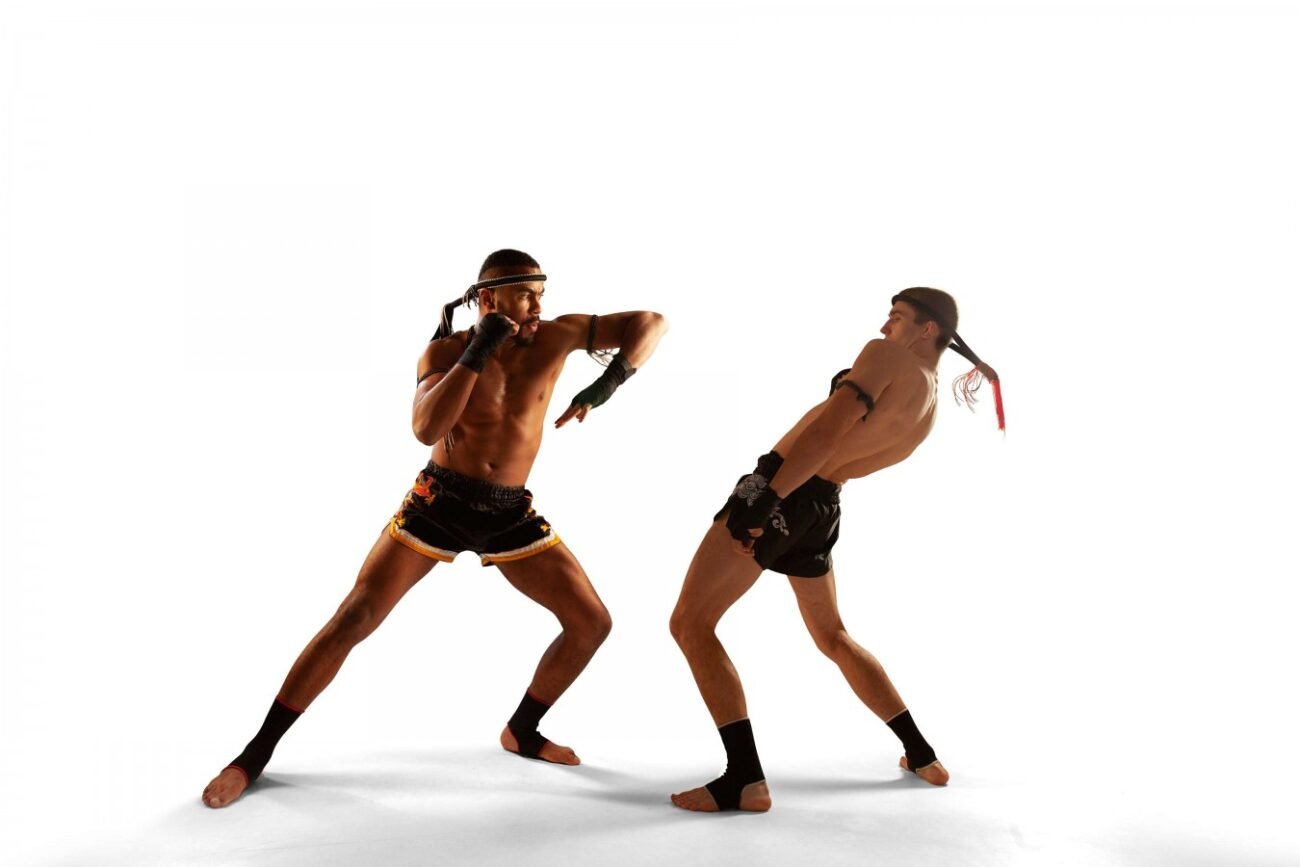
(KNYT Academy — Fight Science Series)
Introduction
Every powerful fighter in history shares one fundamental secret.
Before the punches…
Before the kicks…
Before the knockouts…
There is the stance.
The stance is the foundation of combat.
Without a proper stance:
- strikes lose power
- balance collapses
- defense breaks down
- reaction speed drops
In Muay Thai — often called The Art of Eight Limbs — the stance is even more important.
Unlike many martial arts that rely primarily on hands or kicks, Muay Thai integrates:
• punches
• kicks
• elbows
• knees
All flowing from a single balanced position.
The stance determines:
- your power
- your speed
- your stability
- your defensive capability
In this guide from KNYT, we break down the true Muay Thai stance, how elite fighters use it, and how beginners can master it.
The Philosophy Behind The Muay Thai Stance
Unlike boxing, Muay Thai is not built purely around punching.
It is a complete striking system.
This means the stance must allow:
• explosive kicks
• strong checks
• quick knees
• elbow strikes
• clinch control
A good stance provides three critical advantages.
1 Stability
You must remain balanced even while throwing powerful kicks.
2 Mobility
Fighters must move smoothly around opponents.
3 Defense
The stance naturally protects vital targets.
When done correctly, the stance becomes second nature, allowing the fighter to react instinctively.
Step 1 — Foot Position
Your feet create the base of your entire fighting structure.
For an orthodox fighter:
• left foot forward
• right foot back
• feet shoulder width apart
The back heel should remain slightly raised.
This allows:
• quick kicks
• explosive movement
• faster pivots
Step 2 — Weight Distribution
Proper weight distribution is critical.
The ideal ratio:
50% front leg
50% back leg
This balance allows fighters to:
• kick with either leg
• defend quickly
• move in any direction
If weight is too forward → vulnerable to sweeps.
If weight is too backward → weak punches.
Step 3 — Guard Position
Hands must protect the head.
Key points:
• hands near eyebrows
• elbows tight to ribs
• chin tucked slightly down
This protects:
- jaw
- temple
- liver
- solar plexus
Step 4 — Hip Alignment
The hips must remain slightly turned.
This allows quick rotation for:
• roundhouse kicks
• knees
• hooks
Hip mobility generates real striking power.
The Most Common Beginner Mistakes
Even experienced gym trainees often perform Muay Thai stance incorrectly.
Here are the most common errors.
Standing Too Square
Beginners often face opponents directly.
This exposes:
• ribs
• liver
• stomach
The body should remain slightly angled.
Too Much Weight On The Front Leg
This makes the fighter vulnerable to:
• low kicks
• sweeps
• push kicks
Balanced weight is essential.
Hands Too Low
Dropping hands is the fastest way to get knocked out.
Your guard must always return to position.
How Fighters Train Their Stance
Professional fighters spend months refining their stance.
Training drills include:
• shadowboxing
• mirror training
• balance drills
• footwork drills
Shadowboxing is especially powerful.
It allows fighters to practice:
- movement
- guard
- balance
- rhythm
without an opponent.
The Role Of Stance In Knockout Power
Power in striking does not come from arms.
It comes from the ground.
The stance allows fighters to transfer energy from:
feet → legs → hips → shoulders → fists.
This is called the kinetic chain.
If the stance is weak, the chain breaks.
Defensive Power Of The Stance
The stance also acts as a defensive shield.
From the correct stance fighters can easily:
• check kicks
• block punches
• move out of range
• counter attack
Defense and offense are built from the same position.
The Evolution Of Muay Thai Stances
Traditional Muay Thai used a more upright stance.
Modern fighters adapt slightly depending on style.
For example:
Aggressive fighters:
• slightly heavier front leg
• closer distance
Counter fighters:
• lighter stance
• more mobility
But the core principles remain identical.
Why Every Fighter Must Master The Stance
A great stance gives fighters:
• balance
• power
• speed
• defense
• endurance
Without it, even the strongest athlete will struggle.
But once mastered, the stance becomes automatic.
It becomes the fighter’s natural posture.
Final Thoughts
Every journey in martial arts begins the same way.
Not with a punch.
Not with a kick.
But with how you stand.
Master the stance, and everything else becomes easier.
At KNYT, we believe fitness is not just about strength.
It is about discipline, awareness, and mastery of the body.
And every master begins with the fundamentals.
Leave a comment