Muay Thai Stance Explained: The Foundation of Every Powerful Strike
Introduction: Where Every Fight Truly Begins
Every powerful strike in Muay Thai begins long before the punch or kick is thrown. It begins with the stance.
The stance is the structure that holds everything together. Without a stable stance, power collapses, balance breaks, and defense becomes weak. A fighter may have speed, strength, and determination, but without the correct stance, those attributes cannot translate into effective combat performance.
Muay Thai, widely known as the Art of Eight Limbs, integrates punches, kicks, elbows, and knees into a fluid striking system. Because fighters must transition between these weapons constantly, the stance must allow mobility, balance, and readiness for attack or defense at any moment.
For beginners, mastering the stance is the most important first step. For experienced fighters, refining the stance is a continuous process that determines how efficiently their body moves during combat.
At KNYT, we consider the stance to be the first building block of the warrior’s body. Before learning complex combinations or advanced techniques, every fighter must learn how to stand correctly.
Understanding the Muay Thai Fighting Stance
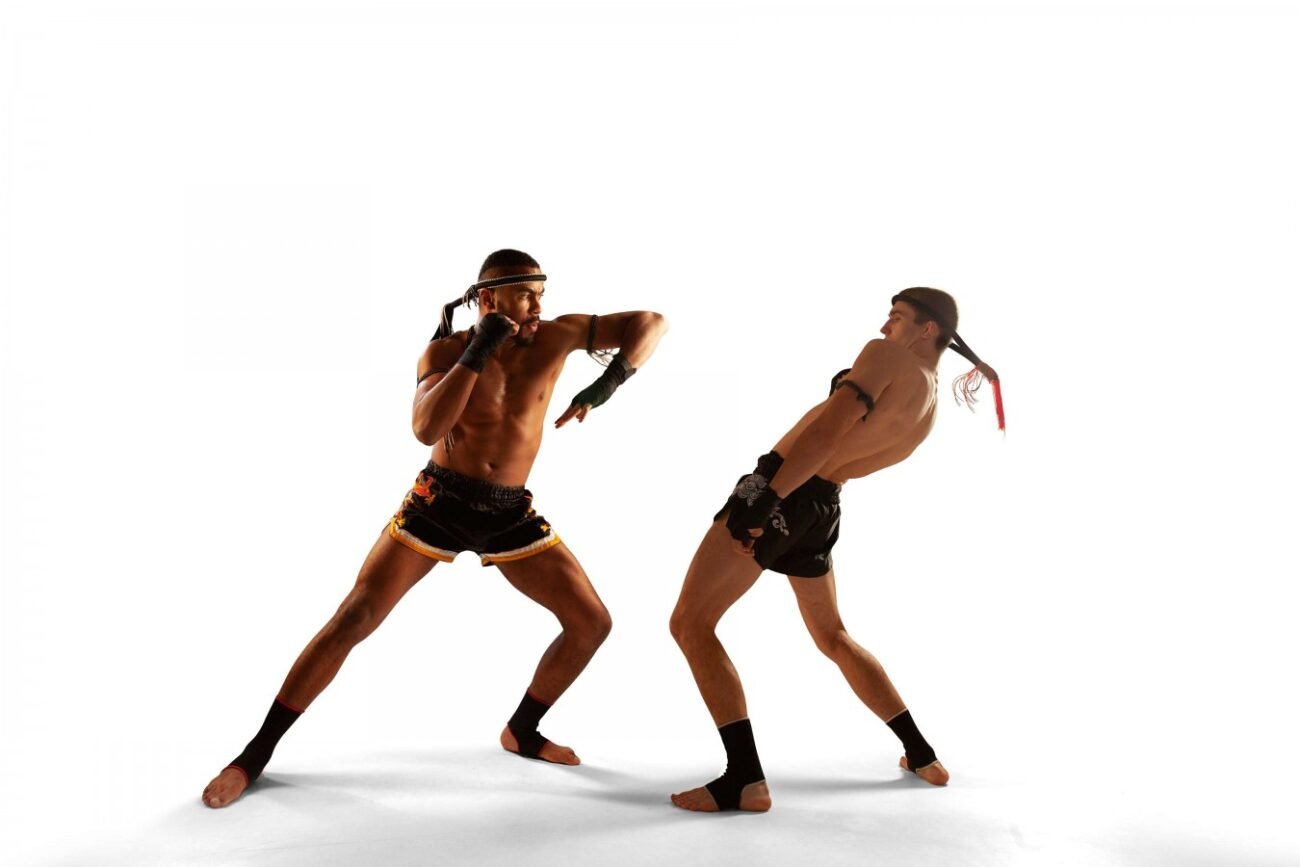
The Muay Thai stance is designed to balance mobility and stability. Unlike some combat sports where the fighter leans heavily forward or sideways, Muay Thai fighters typically maintain a slightly upright posture.
This upright structure allows the fighter to react quickly to incoming strikes while also launching powerful kicks, knees, and elbows.
The stance must achieve three critical objectives. The fighter must remain balanced at all times. The fighter must be able to move smoothly in any direction. The fighter must be able to attack or defend instantly.
These principles form the foundation of Muay Thai movement.
Foot Position: Building the Base
The feet form the base of the entire fighting structure.
For an orthodox fighter, the left foot is placed forward while the right foot stays slightly behind. The distance between the feet should be roughly shoulder width, providing stability without limiting mobility.
The front foot should point slightly inward toward the opponent while the rear foot stays angled outward. This alignment helps maintain balance during strikes and allows the hips to rotate efficiently.
A small but important detail is the rear heel. In Muay Thai, the back heel often remains slightly raised from the ground. This subtle adjustment allows the fighter to pivot quickly when throwing kicks or evading attacks.
If the feet are positioned incorrectly, every movement that follows becomes less efficient.
Weight Distribution and Balance
One of the defining characteristics of the Muay Thai stance is balanced weight distribution.
Many beginners instinctively place most of their weight on the front leg. While this may feel stable at first, it creates vulnerability to low kicks and sweeps.
The ideal distribution is roughly equal between both legs. This balanced stance allows the fighter to launch kicks from either leg and react quickly to incoming strikes.
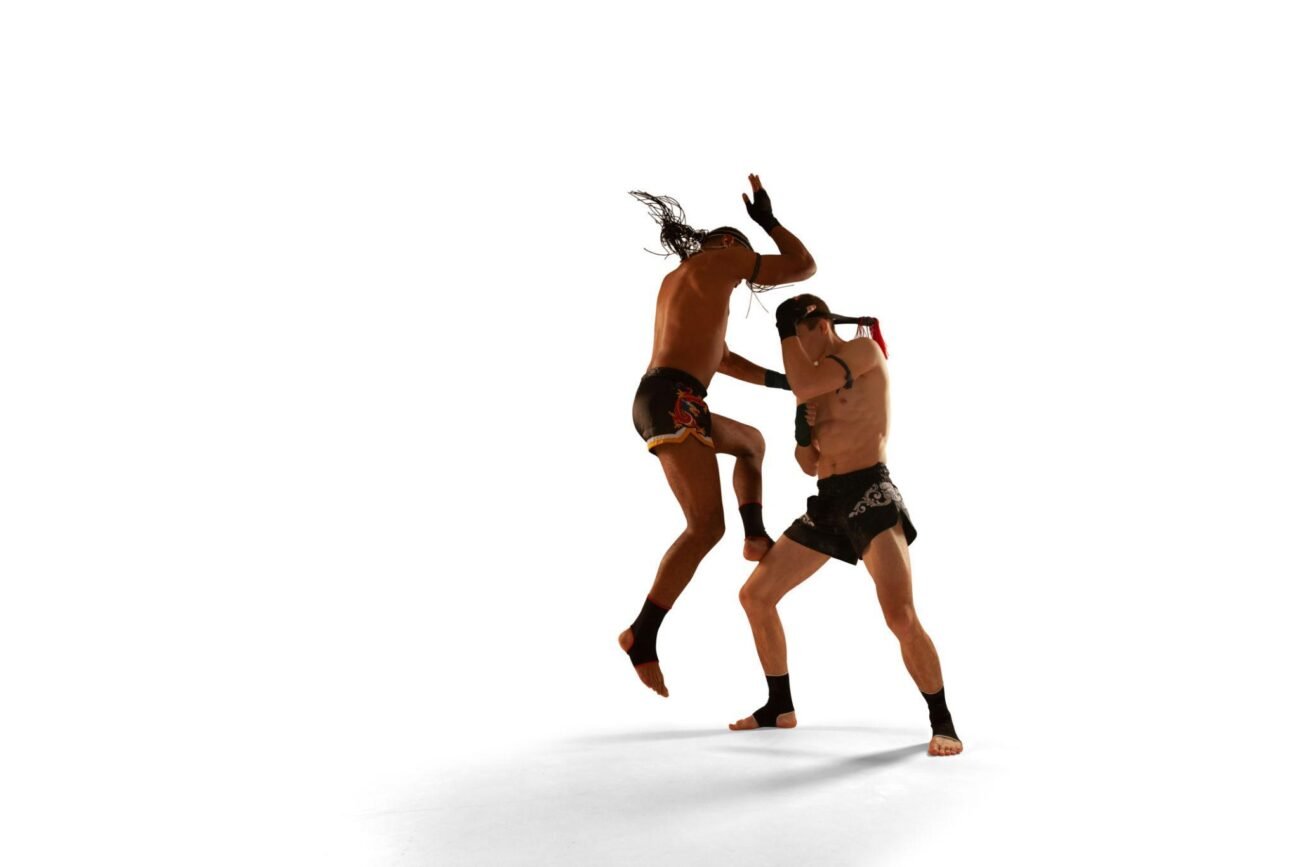
A well-balanced stance also allows the fighter to check kicks by lifting the leg quickly to block incoming attacks.
Balance is not only about preventing falls. It is about maintaining control over every movement.
Guard Position and Defensive Awareness
The guard protects the most vulnerable targets on the body. In Muay Thai, fighters typically hold their hands high near the temples or eyebrows.
The elbows stay close to the ribs to protect the liver and body from strikes. The chin remains slightly tucked to reduce exposure to knockout punches.
Unlike boxing, where fighters rely heavily on head movement, Muay Thai defense often relies on strong guard positioning and strategic blocking.
A disciplined guard position ensures that even during intense exchanges, the fighter maintains protection.
The guard should return to its original position immediately after every strike.
Hip Alignment and Power Generation
Power in Muay Thai does not originate from the arms or legs alone. It comes from the coordinated rotation of the hips.
The stance positions the hips in a way that allows explosive rotational movement.
When a fighter throws a punch or kick, energy travels through the body in a chain beginning from the feet and traveling through the hips and core.
This chain is often called the kinetic chain.
A properly aligned stance allows the hips to rotate freely, generating significantly more striking power.
If the stance is rigid or misaligned, the fighter loses both power and efficiency.
Orthodox and Southpaw Stances
Most fighters adopt one of two primary stances.
The orthodox stance places the left foot forward and the right foot behind. This stance is common among right-handed fighters because it positions the stronger hand as the rear power punch.
The southpaw stance reverses this structure, placing the right foot forward and the left foot behind.
Left-handed fighters often prefer the southpaw stance because it positions their dominant hand for powerful rear strikes.
Both stances follow the same structural principles. The difference lies only in the orientation of the body.
Understanding both stances is important because fighters often face opponents with different orientations.
Movement Within the Stance
A good stance is not static. It allows constant movement.
Muay Thai fighters glide forward, backward, and sideways while maintaining their stance structure.
The key principle is to move without crossing the feet. Crossing the feet disrupts balance and makes the fighter vulnerable to attacks.
Instead, fighters step lightly while maintaining the same distance between their feet.
This controlled movement allows them to close distance, evade strikes, and create angles for attack.
Movement is the bridge between defense and offense.
Common Beginner Mistakes
Many beginners struggle with stance fundamentals.
One common mistake is standing too upright with locked knees. This makes movement stiff and slow.
Another mistake is leaning too far forward. Leaning forward exposes the head to counters and reduces defensive capability.
Some beginners also drop their hands during combinations. This creates dangerous openings.
The correct stance should feel relaxed yet ready. The body should feel balanced and capable of moving instantly in any direction.
Stance Training Drills
Fighters spend countless hours refining their stance.
Shadowboxing is one of the most effective ways to practice stance mechanics. By visualizing an opponent and moving around imaginary attacks, fighters develop natural movement patterns.
Mirror training is also valuable. Watching oneself in a mirror helps correct posture and guard position.
Balance drills such as standing on one leg or performing slow kicks strengthen the stabilizing muscles necessary for combat.
These drills may appear simple, but they are essential for developing a strong foundation.
The Philosophy Behind the Stance
The Muay Thai stance represents more than just a physical position.
It reflects discipline, control, and readiness.
When a fighter stands correctly, their body is aligned for both offense and defense. Their breathing becomes steady, their focus sharpens, and their movements become deliberate.
In many ways, the stance symbolizes the calm before action.
It is the moment where the fighter becomes completely present.
Final Thoughts
Every powerful strike, every successful defense, and every winning exchange begins with a stance.
Mastering the Muay Thai stance transforms the way a fighter moves. It builds balance, increases striking efficiency, and enhances defensive awareness.
For beginners, the stance is the first lesson.
For experienced fighters, it remains a constant area of refinement.
At KNYT, we believe that great fighters are not defined by how hard they strike, but by how well they control their body in every moment.
And that control always begins with the stance.