
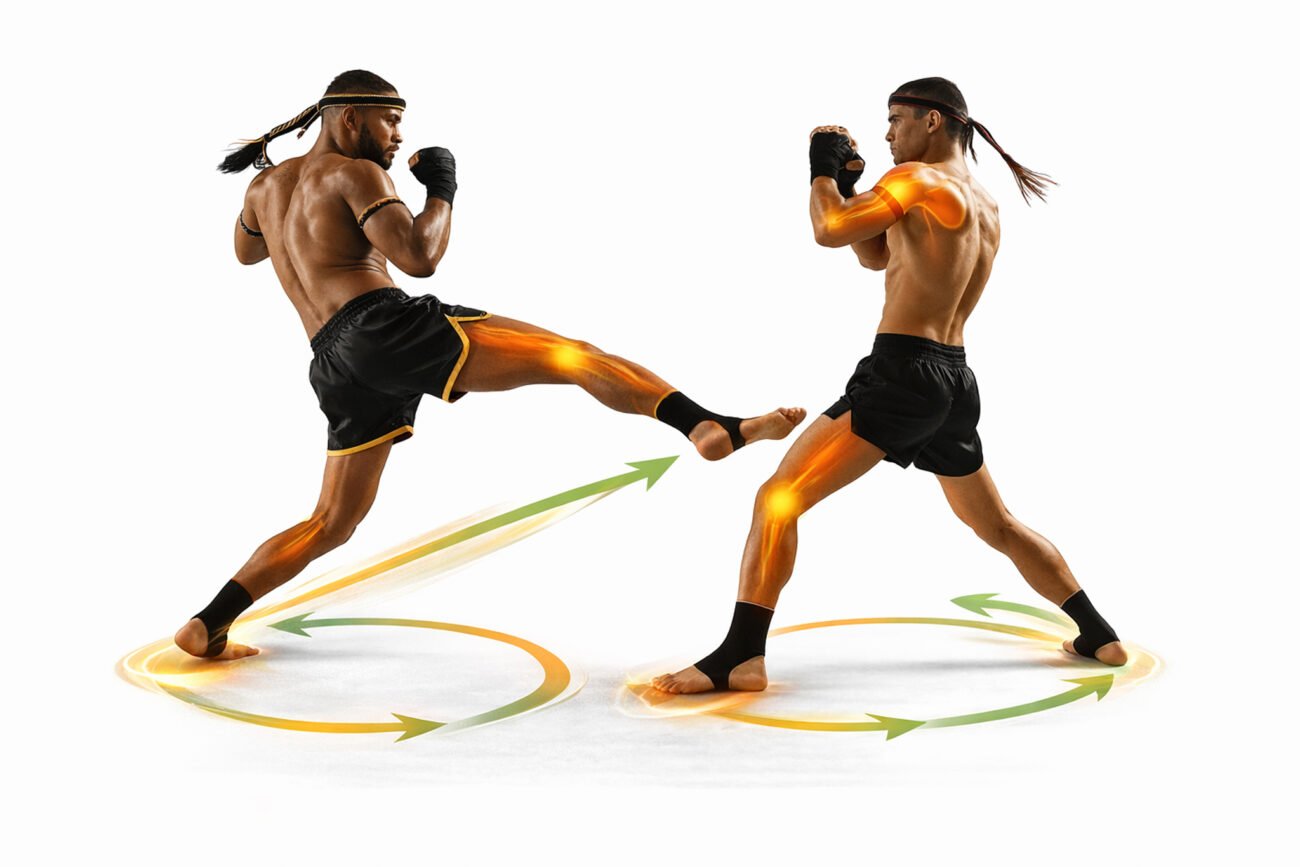
Footwork Secrets Used by Elite Fighters: The Hidden Skill That Wins Fights
Introduction: The Skill Most Beginners Ignore
When people watch combat sports, their attention usually goes to the spectacular moments.
The knockout punch.
The devastating kick.
The explosive combination.
But the truth is that most fights are not won by a single strike.
They are won by movement.
Elite fighters understand something that beginners often overlook. The real battle begins before a punch is thrown. It begins with positioning, angles, distance control, and balance.
All of these things are controlled by footwork.
Footwork is the invisible skill that separates amateur fighters from elite athletes. It determines who controls distance, who creates angles, and who dictates the rhythm of the fight.
A fighter with poor footwork may have strength and speed, but they will constantly struggle to land clean strikes.
A fighter with excellent footwork can make opponents miss, create openings, and attack from positions where they cannot be countered.
At KNYT, we consider footwork to be one of the most important foundations in martial arts training.
Because in combat sports, your feet determine where the fight happens.
Why Footwork Is the Foundation of Combat Movement
Every movement in combat sports begins from the ground.
Before a punch travels forward or a kick swings through the air, the fighter must first position their body correctly.
Footwork controls three critical elements of a fight.
The first is distance management. Fighters must constantly adjust how close or far they are from their opponent.
The second is balance. A fighter must remain stable while attacking, defending, and moving.
The third is angle creation. Proper footwork allows fighters to attack from unexpected directions.
Without these elements, striking becomes inefficient and predictable.
This is why professional fighters spend enormous amounts of time training movement patterns.
The Principle of Balance and Stability
One of the most important aspects of footwork is maintaining balance.
Every movement must allow the fighter to remain ready to strike or defend at any moment.
When a fighter loses balance, they lose control of the exchange.
For example, if a fighter steps too far forward while punching, they may become vulnerable to counters.
If they cross their feet while moving, their balance becomes unstable.
Elite fighters maintain a stance that allows them to move quickly without sacrificing stability.
Their weight is distributed evenly, allowing them to change direction instantly.
Balance allows a fighter to transition smoothly between offense and defense.
The Basic Fighting Step
The most fundamental footwork pattern in combat sports is the basic step.
Instead of reaching forward with long strides, fighters move by sliding their feet across the ground.
When moving forward, the front foot steps first while the rear foot follows.
When moving backward, the rear foot moves first while the front foot follows.
This technique keeps the stance structure intact.
The distance between the feet remains consistent, ensuring the fighter remains balanced and ready to strike.
This simple movement pattern forms the basis of almost all ring movement.
Lateral Movement: Controlling Angles
One of the most effective ways to outmaneuver an opponent is through lateral movement.
Instead of moving straight forward or backward, elite fighters often move sideways.
This movement creates angles that make it difficult for opponents to predict attacks.
By stepping slightly to the left or right, fighters can position themselves outside the opponent’s direct line of attack.
This forces opponents to constantly adjust their stance and movement.
Lateral movement also allows fighters to escape dangerous exchanges without retreating too far.
The ability to control angles gives fighters a major strategic advantage.
Pivoting: The Secret to Escaping Pressure
Pivoting is another essential footwork skill.
A pivot involves rotating the body around the lead foot while changing direction.
This movement allows fighters to move out of the opponent’s attack line while maintaining their stance.
Pivoting is especially useful when an opponent is advancing aggressively.
Instead of moving straight backward, the fighter pivots and shifts to a new angle.
This creates opportunities for counterattacks.
Many elite fighters use pivots to maintain control even when under heavy pressure.
Ring Awareness and Spatial Control
Footwork is not only about moving the feet.
It is also about understanding space.
Elite fighters constantly analyze their position within the ring or training area.
They are aware of where their opponent stands and where the boundaries are.
This awareness allows them to avoid getting trapped against the ropes or corner.
Fighters with strong spatial awareness guide the fight toward positions where they have the advantage.
They may push opponents toward the edges while maintaining open space for themselves.
This strategic movement often determines the outcome of a fight.
The Role of Agility and Speed
Footwork also requires agility.
Fighters must be able to change direction quickly while maintaining balance.
Agility allows fighters to react instantly to their opponent’s movements.
For example, when an opponent throws a punch, a quick step backward can create enough distance to avoid the strike.
Immediately afterward, the fighter may step forward again to counterattack.
This fluid movement requires strong coordination between the brain and muscles.
Training drills such as agility ladders, cone drills, and shadowboxing help develop this responsiveness.
Defensive Footwork
One of the most powerful uses of footwork is defense.
Instead of blocking every strike, fighters can avoid many attacks simply by moving out of range.
This concept is often called defensive movement.
By stepping slightly backward or sideways, fighters force their opponents to miss.
Missing attacks can cause opponents to lose balance or expose openings.
This creates opportunities for counters.
Defensive footwork reduces damage while conserving energy.
It allows fighters to control the pace of the fight without absorbing unnecessary strikes.
Offensive Footwork
Footwork is not only defensive.
It is also a tool for creating offense.
Fighters often step forward aggressively to close distance before launching combinations.
A quick step forward can surprise opponents and create openings.
Elite fighters also use stepping angles to attack from positions where their opponent’s guard is weaker.
This combination of movement and striking makes attacks much harder to defend.
Offensive footwork transforms strikes into coordinated movements rather than isolated actions.
Training Drills for Better Footwork
Fighters train footwork through several specialized drills.
Shadowboxing is one of the most effective methods. By visualizing an opponent, fighters practice movement patterns while maintaining proper stance.
Jump rope training improves rhythm and coordination while strengthening the calves and ankles.
Agility ladder drills develop quick foot placement and directional changes.
Cone drills help fighters practice moving around obstacles while maintaining balance.
These exercises build the muscle memory needed for smooth and efficient movement.
Over time, the fighter begins to move naturally without conscious thought.
The Psychological Impact of Superior Movement
Footwork also influences the psychological dynamics of a fight.
When one fighter consistently controls movement and positioning, the opponent may begin to feel frustrated.
Repeatedly missing strikes or being forced into uncomfortable positions can drain an opponent’s confidence.
Elite fighters use this psychological pressure to their advantage.
By controlling movement, they make the opponent react rather than initiate.
This control often leads to mistakes and openings.
Movement becomes a strategic weapon.
The KNYT Perspective on Movement Mastery
At KNYT, we view footwork as the foundation of all striking arts.
A fighter’s power, speed, and technique become far more effective when supported by proper movement.
Mastering footwork transforms a fighter from someone who simply throws strikes into someone who controls the entire fight.
This principle applies beyond combat sports as well.
Movement is a fundamental expression of physical intelligence.
When the body moves efficiently, every action becomes more powerful and precise.
Final Thoughts
Footwork may not always capture the spotlight, but it is one of the most important skills in martial arts.
It determines distance, balance, positioning, and timing.
Fighters who master footwork gain the ability to control both offense and defense with precision.
They can attack from advantageous angles while avoiding unnecessary damage.
At KNYT, we believe that great fighters are not defined by the strikes they throw.
They are defined by how they move.
Because in combat sports, victory often belongs to the fighter who controls the ground beneath their feet.
Leave a comment